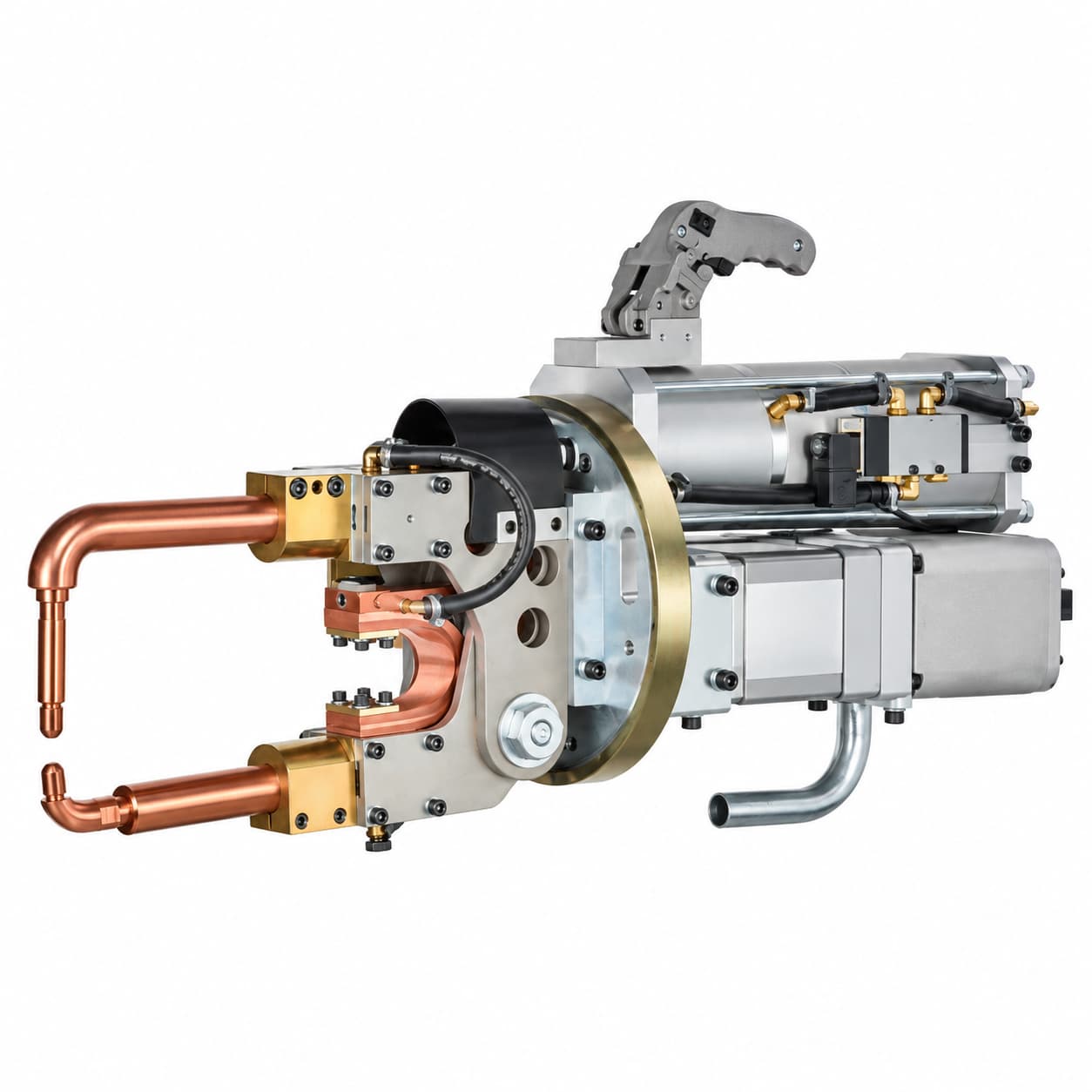
Aluminum alloy resistance spot welding can be challenging due to rapid heat dissipation, white oxide deposits on electrode surfaces, and frequent electrode dressing. These issues can affect weld nugget formation, welding consistency, and production efficiency.
This article explains three common aluminum spot welding problems and practical ways to improve weld quality, maintain electrode condition, and achieve more consistent results. It also explores how MFDC inverter spot welding technology can help improve control of the welding process.
For a broader overview of aluminum spot welding techniques and process considerations, read our guide to Aluminum Spot Welding: Techniques, Challenges, and Solutions.
Table of Contents
- Why Aluminum Spot Welding Requires Careful Process Control
- 1. Rapid Heat Dissipation and Weld Nugget Formation
- 2. White Oxide Buildup and Electrode Sticking
- 3. Frequent Electrode Dressing and Electrode Life
- How Can Aluminum Spot Welding Quality Be Improved?
- Why MFDC Inverter Technology Is Suitable
- WPI MFDC Inverter Spot Welding Gun
- Frequently Asked Questions
- Improve Aluminum Spot Welding with WPI Taiwan
Why Aluminum Spot Welding Requires Careful Process Control
Aluminum has high thermal conductivity, which allows heat to dissipate rapidly from the weld zone. Its low electrical resistance means that relatively high welding current is often required to generate sufficient resistance heat at the joint. Aluminum also forms a stable surface oxide layer that can affect electrical contact and electrode-to-workpiece interaction.
These characteristics make careful control of welding current, weld time, electrode force, surface condition, and electrode cooling essential for consistent weld quality.
1. Rapid Heat Dissipation Can Prevent Proper Weld Nugget Formation
Why Does Heat Dissipation Matter?
Resistance spot welding requires sufficient heat to be generated and concentrated at the sheet interface to form a sound weld nugget. Because aluminum conducts heat rapidly, insufficient welding current, unsuitable weld time, inadequate heat input, or unstable current delivery can prevent proper nugget formation.
Simply extending weld time is not always the best solution. Excessive heating may damage the workpiece surface or accelerate electrode deterioration. Appropriate welding parameters must be established for the specific material and application.
What Happens When the Weld Nugget Is Too Small?
An undersized weld nugget can reduce joint strength and increase the risk of weld separation under service loads. The required nugget size and acceptable joint strength should be established through material-specific weld trials and appropriate quality testing.
2. White Oxide Buildup and Electrode Sticking
White Oxide Buildup on Electrode Surfaces
During aluminum alloy resistance spot welding, white oxide deposits may accumulate on electrode surfaces during repeated welding. Aluminum readily forms a nonconductive oxide layer on its surface, which can affect electrical contact conditions.
Deposits on the electrode surface may also interfere with consistent current transfer and contribute to variations in welding performance.
Electrode Sticking and Heat Buildup
Aluminum has low electrical resistance, so relatively high welding current is often required to generate sufficient resistance heat at the joint. Heat generated at the electrode–workpiece interface can cause aluminum pickup on the electrode face and increase the risk of electrode sticking.
When sticking occurs, the electrode may be difficult to separate cleanly from the workpiece, potentially interrupting production and increasing maintenance requirements.
To reduce the risk of electrode sticking, proper control of welding current and time, adequate electrode cooling, and regular electrode surface maintenance are essential. Keeping the electrode face in good condition helps maintain consistent welding performance and extend electrode service life.
3. Frequent Electrode Dressing Reduces Electrode Life and Production Speed
Why Does Aluminum Welding Require Frequent Electrode Dressing?
White oxide buildup, electrode sticking, and repeated exposure to high welding temperatures can affect the electrode working surface and tip geometry over time.
Electrode dressing helps restore the required tip profile, but each dressing operation removes some electrode material. The goal is to maintain the proper electrode tip geometry and surface condition while avoiding unnecessary material removal.
What Happens When the Electrode Is Dressed Too Frequently?
Frequent dressing removes more electrode material, shortening electrode service life and increasing the need for tip replacement and maintenance. These activities can cause additional downtime and reduce production throughput.
Properly selected dressing tools and appropriate inspection intervals can help maintain consistent electrode geometry. However, they cannot replace stable welding parameters and effective electrode cooling.
Learn more about electrode maintenance: WPI Taiwan Tip Dresser.
How Can Aluminum Spot Welding Quality Be Improved?
- Increase and stabilize welding current
Because aluminum has low electrical resistance, a relatively high welding current is often required to generate sufficient resistance heat. Select an appropriate current and maintain stable current delivery. Set and verify welding current according to the alloy, material thickness, joint configuration, and equipment capability. Excessive current can also cause welding defects.
- Precisely control welding time
Use a validated weld schedule to generate sufficient heat for proper weld nugget formation while avoiding unnecessary thermal exposure.
- Maintain stable electrode force
Maintain consistent electrode force and proper alignment to support repeatable contact conditions. Verify electrode force according to the welding schedule and workpiece requirements.
- Control electrode temperature
Provide adequate electrode cooling and check coolant flow and electrode temperature during continuous production.
- Maintain the electrode working surface
Inspect electrode tip geometry, surface deposits, and signs of electrode sticking. Keep both sheet surfaces and electrode faces in suitable condition for consistent welding.
- Reduce unnecessary electrode dressing
Use weld-quality results and electrode inspections to establish appropriate maintenance intervals rather than dressing electrodes automatically after every minor change.
A practical improvement program should combine weld-schedule trials, weld nugget evaluation, destructive testing where appropriate, electrode inspection, and ongoing production monitoring. No single parameter can resolve every aluminum spot welding issue.
Why MFDC Inverter Technology Is Suitable for Aluminum Spot Welding
Stable DC Welding Current
WPI Taiwan's MFDC inverter technology converts three-phase input power into controlled DC welding output. Stable DC current helps provide repeatable heat generation for aluminum alloys, which often require relatively high welding current due to their low electrical resistance.
Precise Welding Current and Time Control
MFDC inverter technology allows precise control of welding current and weld time. This helps regulate heat input and maintain repeatable welding conditions when appropriate parameters are established for the aluminum alloy, material thickness, and joint design.
Shorter Welding Time Can Help Control Heat Loss
A properly selected welding schedule using relatively high current over a shorter duration can help generate sufficient heat for weld nugget formation before excessive heat dissipates into the surrounding aluminum.
The appropriate current and weld time must be validated through welding trials for the specific alloy, material thickness, electrode configuration, and joint design.
Improved Process Control for More Consistent Welding
Stable current output and repeatable timing help reduce variations in the welding process. However, electrode sticking and wear are also influenced by electrode surface condition, electrode force, cooling, and maintenance.
MFDC technology should therefore be considered part of a complete aluminum spot welding solution, not a stand-alone guarantee against welding defects.
WPI MFDC Inverter Spot Welding Gun for Aluminum Applications
WPI Taiwan manufactures MFDC Inverter Spot Welding Guns for resistance spot welding applications, including aluminum alloys. The system provides controlled DC welding output and millisecond-level current control to help regulate heat input and improve welding consistency.
WPI offers equipment capacity options of 80, 100, 160, and 225 kVA. These ratings indicate equipment capacity, not welding current. The appropriate configuration and welding parameters depend on the aluminum alloy, material thickness, joint design, electrode configuration, and production requirements.
For product details, visit the WPI MFDC Inverter Spot Welding Gun page.
If you are evaluating MFDC spot welding for aluminum components, contact WPI Taiwan with details of your alloy, material thickness, joint configuration, electrode accessibility, and production requirements. Our team can discuss a suitable welding solution for your application.
Electrode dressing remains an important supporting maintenance measure for maintaining electrode condition and consistent welding performance.
Frequently Asked Questions About Aluminum Spot Welding
Why is aluminum difficult to spot weld?
Aluminum has high thermal conductivity and low electrical resistance, making it more challenging to generate and concentrate sufficient heat at the joint interface. Its surface oxide layer can also affect electrical contact. Careful control of welding current, weld time, electrode force, and surface condition is essential for consistent weld quality.
Why does white oxide buildup occur during aluminum spot welding?
Aluminum readily forms a nonconductive oxide layer on its surface. During repeated resistance spot welding, white deposits may also accumulate on electrode surfaces, potentially affecting electrical contact and welding consistency. The exact composition of these deposits should not be assumed without technical analysis.
Why do electrodes stick to aluminum during spot welding?
The heat generated at the electrode–workpiece interface can cause aluminum pickup on the electrode face, increasing the risk of electrode sticking. Welding current and time, electrode force, cooling, and electrode surface condition all influence this risk. Appropriate parameter control and regular electrode maintenance help support stable welding performance.
Why do aluminum spot welding electrodes wear quickly?
Repeated exposure to welding heat, electrode sticking, and surface deposits can affect electrode condition and increase maintenance requirements. Electrode dressing restores the required tip profile, but each dressing operation removes electrode material. Appropriate dressing intervals help maintain tip geometry while avoiding unnecessary material removal and premature electrode replacement.
Can MFDC inverter technology improve aluminum spot welding?
Yes. MFDC inverter technology provides controlled DC welding output and can support precise welding current and time control. These capabilities help regulate heat input and improve welding consistency when suitable parameters are established. Actual results also depend on electrode force, cooling, workpiece surface condition, joint design, and electrode maintenance.
Improve Aluminum Spot Welding with WPI Taiwan
If your production line experiences insufficient weld nugget formation, white deposits on electrode surfaces, electrode sticking, frequent electrode dressing, or inconsistent weld quality, WPI Taiwan can discuss an MFDC Inverter Spot Welding Gun configuration suited to your application.
Share your aluminum alloy, material thickness, joint configuration, electrode accessibility, and production requirements to support an application-specific evaluation.
- Contact WPI Taiwan: Contact Us
- Product details: WPI MFDC Inverter Spot Welding Gun